Industrial Safety Helmets
Industrial Safety Helmets protect the head from falling objects and low-beam impacts across construction, factories, and oil and gas sites. They are rated Class G for general use or Class C (no electrical protection) depending on the work environment, while Class E helmets for electrical work are listed under Electrical PPE, and vary in brim style (full brim or front brim), internal suspension (4-point or 6-point), and shell material (ABS, HDPE, polycarbonate).
(10 products)
About this category
Industrial safety helmets differ along three dimensions that drive application fit. The first is the electrical insulation class: Class G (General) is proof-tested at 2200 V for general use and Class C (Conductive) offers no electrical protection and suits environments without electrical hazard; these are classification test values, while Class E helmets (proof-tested at 20 000 V) for electrical work are listed under Electrical Safety & Testing → Electrical PPE, so check manufacturer data and the risk assessment when selecting. The second is brim design: a full brim shields from sun and rain and suits outdoor work, while a front brim is lighter and preferred in tight spaces. The third is the internal suspension that absorbs impact energy; a 4-point suspension is traditional, while a 6-point suspension spreads impact more evenly and adds comfort over long shifts. Class C models are available with ventilation slots, while Class G models are unvented to preserve insulation, and most models come with adjustable chin straps. Selection considers compatibility with safety eyewear, hearing protection, and respirators, and the internal cradle size for the user's head. Pre-use inspection for cracks is mandatory, with replacement after any impact or every 2-5 years per the manufacturer's recommendation. Specifications follow ANSI Z89.1 or EN 397; approval type varies by brand and model.
Read moreHide details
Industrial safety helmets differ along three dimensions that drive application fit. The first is the electrical insulation class: Class G (General) is proof-tested at 2200 V for general use and Class C (Conductive) offers no electrical protection and suits environments without electrical hazard; these are classification test values, while Class E helmets (proof-tested at 20 000 V) for electrical work are listed under Electrical Safety & Testing → Electrical PPE, so check manufacturer data and the risk assessment when selecting. The second is brim design: a full brim shields from sun and rain and suits outdoor work, while a front brim is lighter and preferred in tight spaces. The third is the internal suspension that absorbs impact energy; a 4-point suspension is traditional, while a 6-point suspension spreads impact more evenly and adds comfort over long shifts. Class C models are available with ventilation slots, while Class G models are unvented to preserve insulation, and most models come with adjustable chin straps. Selection considers compatibility with safety eyewear, hearing protection, and respirators, and the internal cradle size for the user's head. Pre-use inspection for cracks is mandatory, with replacement after any impact or every 2-5 years per the manufacturer's recommendation. Specifications follow ANSI Z89.1 or EN 397; approval type varies by brand and model.
Filters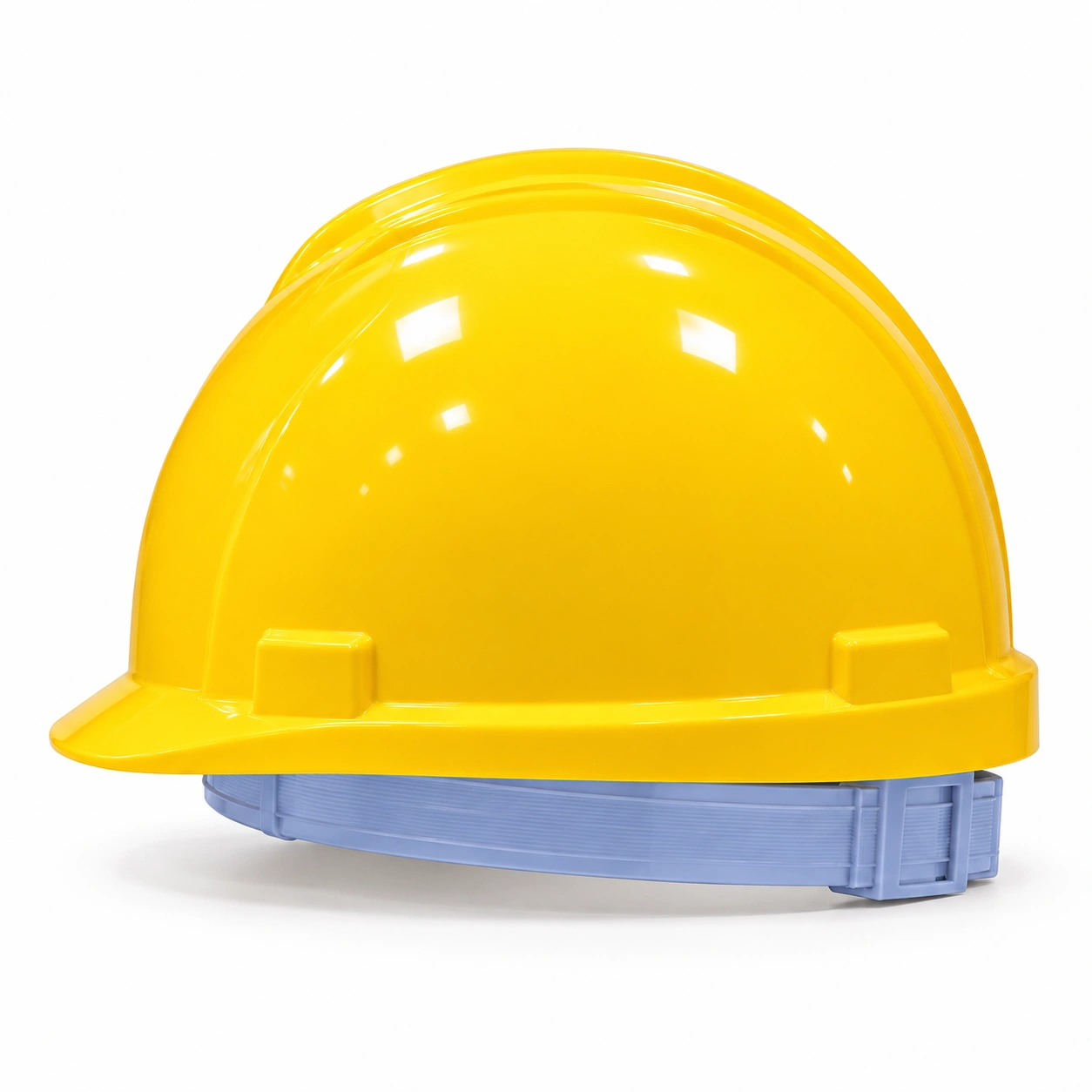
Showing 1–10 of 10 products